FAQ · Denver, CO
Epoxy Flooring Questions and Answers
Costs, cure times, moisture testing, permits and what a Denver winter does to a floor.
How much does epoxy flooring cost in Denver?
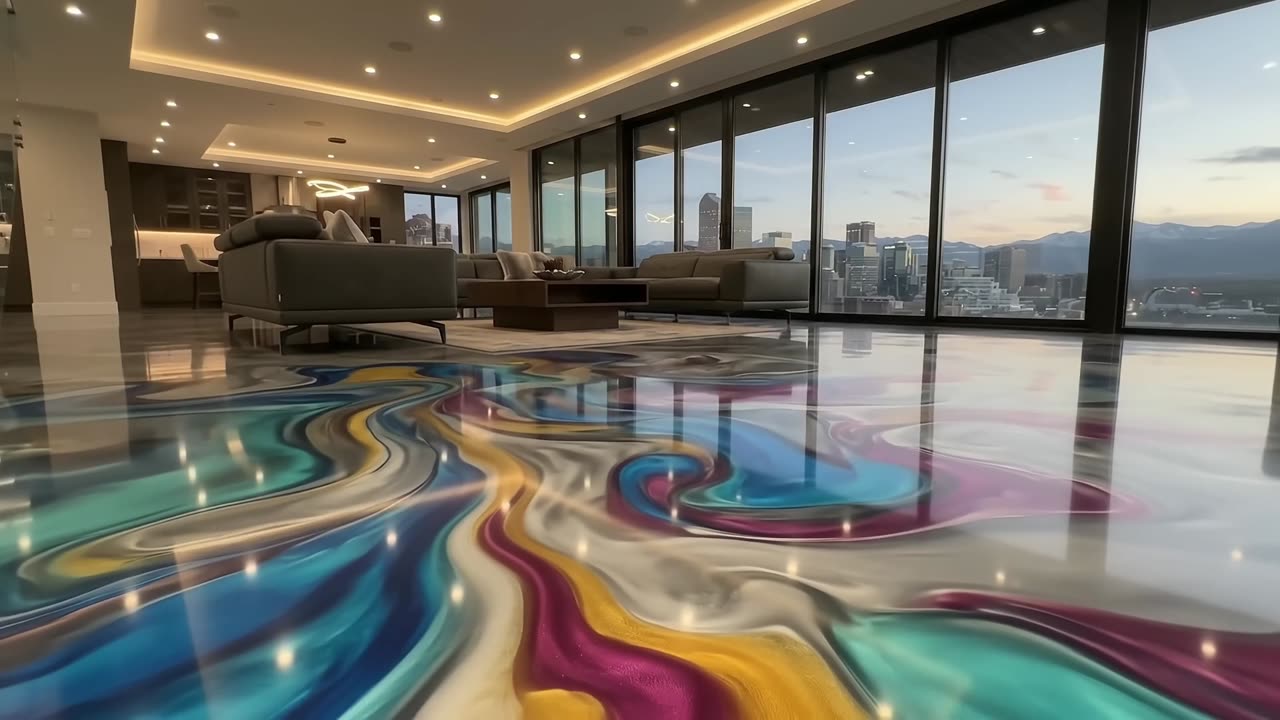
Published Denver ranges run $4 to $6 per square foot for a single-color system with a clear coat, $6 to $9 for full-broadcast flake with a polyaspartic topcoat, and $7 to $12 for metallic. A two-car garage typically lands between $1,800 and $5,500 installed.
How long does a garage floor take?
One to two days for a two-car garage. Prep is most of the first day, coating and cure fill the second. Foot traffic the next day, vehicles after 24 to 72 hours.
Will the floor hold up to Denver winters?
A correctly built system does. The risk is de-icing salt, which is abrasive and chemically active. A full-broadcast flake with a polyaspartic topcoat handles it better than a thin solid film.
Do I need a permit?
A coating over an existing slab is a finish, not permitted work. Structural, drainage, electrical or egress work is permitted. In Denver that means Denver Community Planning & Development; in the suburbs each city runs its own building department.
Why does my slab need moisture testing?
Denver-series soils are fine, smectitic clays that drain slowly. Water vapour moving up through the slab collects under a coating and blisters it. The thresholds are below 5 lb per 1,000 sq ft per 24 hours (ASTM F1869) or below 75% RH (ASTM F2170).
What if the moisture reading is too high?
The system changes, not just the schedule. A vapour-barrier system, or a polishing scope with no film at all, is the honest answer over a wet slab.
How cold is too cold to install?
Standard epoxy wants a slab above roughly 50 F. Denver winter work needs the space heated rather than rushed. Polyaspartic tolerates cooler starts but still wants a warm slab.
Can you coat over an old failing coating?
Not over a failed one. It has to come off first. The cause of the failure is diagnosed before anything goes back down, because a peeling floor usually failed at the slab.
How long will the floor last?
12 to 15+ years before a topcoat refresh on a professional system, depending on traffic and how the space is used.
Does epoxy get slippery when wet?
A flake broadcast gives texture without an additive. Solid-color systems need a slip additive where the floor takes foot traffic or water.
Can I park on it right away?
Foot traffic the next day in most systems. Vehicles after 24 to 72 hours. Polyaspartic clears on the faster end.
Do you install basement floors?
Basements are quoted on moisture first. Where readings are high, the scope becomes a vapour-barrier system or polishing rather than a thin film.
What about cracks?
Cracks and moving joints are routed and filled with a flexible material before coating. Filling them rigidly invites the crack to re-open through the new film.
Can metallic epoxy be repaired?
Yes, but the patch will not match seamlessly. The pattern is worked by hand while wet, so a repair is a local re-pour rather than a touch-up.
Is epoxy or polishing better for my floor?
Polishing has no film to peel and suits slabs that move. Epoxy gives color, flake and a sealed surface. If the slab is wet or unsound, polishing is usually the honest recommendation.
Do you work outside Denver?
Yes. Requests are routed across the metro, from Aurora and Lakewood to Highlands Ranch and Longmont.
How is the price worked out?
Square footage, slab condition, prep method and the system. Two identically sized garages can differ by a third on prep alone.
What affects the prep cost most?
Unsound concrete, old coatings, oil saturation and moisture. Slab repair and moisture mitigation can add $1 to $4 per square foot.
Do you quote before work starts?
Yes. Ask for an itemized written quote that separates prep, film thickness and warranty so two quotes can be compared line by line.
Are you the installer?
No. This is a free matching service. It routes your request to local epoxy contractors who do the work, and you take it from there.